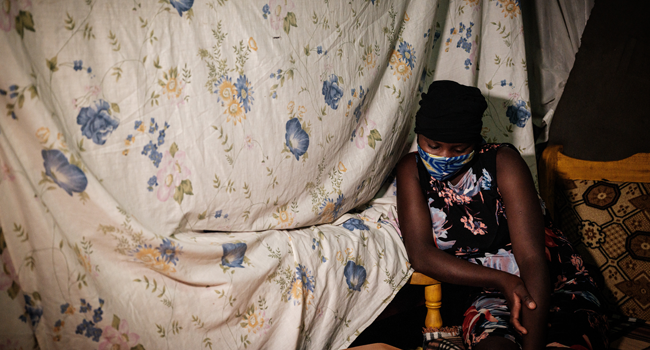
months pregnant talks about her unexpected pregnancy as schools are
closed due to the COVID-19 outbreak, during an AFP interview at her
sister’s home in Raila slum, next to Kibera slum, in Nairobi, on
July 15, 2020. Yasuyoshi CHIBA / AFP
Sixteen-year-old Linnet covers her face bashfully,
mumbling into her hands as she recounts how she met the young man
who bought her fries and gave her money, before leaving her
pregnant and facing even greater poverty than before.
She is one of thousands of teenagers who fall pregnant every
year in Kenya, a problem experts fear is worsening during the
coronavirus pandemic, with some girls pushed into transactional sex
to survive while others have more sex as they stay home from
school.
Shortly before the pandemic hit Kenya in March, Linnet’s farmer
parents in western Busia sent her to Nairobi to find a job as they
could no longer afford her school fees.
She moved in with her sister, her sister’s husband — the sole
breadwinner — and their two small children in a tiny
corrugated-iron room in the Kibera slum.
Food was scarce and the advances of the 22-year-old boda-boda
(motorbike taxi) rider, and the luxuries he offered, were hard to
resist.
“He would buy me some fries, shoes and also give me some money,”
said Linnet, her dress of brightly-coloured flowers stretched tight
against her four-month pregnant belly.
She said she had asked him to wear a condom, but he had removed
it during intercourse. He has demanded she terminate the pregnancy,
and the romance has dissipated.
“I am too young to be pregnant and now I am going to be a mother
to a kid,” she said.
“A child needs porridge, milk, money. I feel bad.”
‘The tip of the iceberg’
Kenya has long grappled with high teen pregnancy rates.
However numbers had fallen from 82 pregnancies per 1,000 girls
between the ages of 15 and 19 in 2016, to 71 per 1,000 in 2017,
according to Save the Children.
Last month, figures from a leaked health ministry document
showing thousands of girls had fallen pregnant during lockdown
between March and May led to fierce debate on social media.
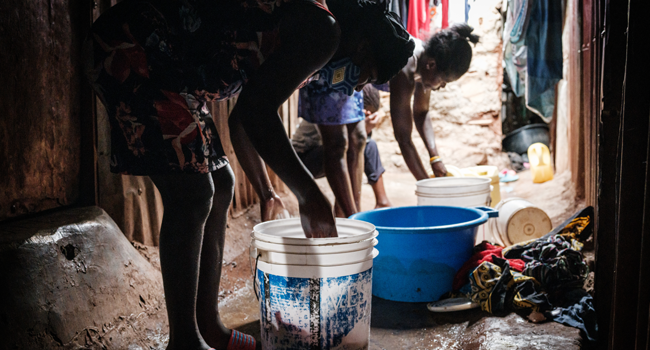
3 months pregnant helps to wash cloths after an interview for AFP
with her sister Carol, 22, about Linet’s unexpected pregnancy as
schools are closed due to the COVID-19 outbreak, at her sister’s
home in Raila slum, next to Kibera slum, in Nairobi, on July 15,
2020. Yasuyoshi CHIBA / AFP
In Nairobi alone almost 5,000 girls fell pregnant, just over 500
of them between the ages of 10 and 14, according to the figures
from a data unit within the ministry.
Both President Uhuru Kenyatta and his Health Minister Mutahi
Kagwe have mentioned the rise in teen pregnancies during addresses
to the nation.
“Teenage motherhood is a catastrophic, disempowering outcome in
the life of a girl. More often than not it spells doom to the
teenager’s attainment of life’s full potential,” Kagwe said last
month.
Evelyne Opondo, senior Africa regional director at the Centre
for Reproductive Rights, said evidence of an uptick in pregnancies
directly linked to the pandemic was still “anecdotal”.
(adsbygoogle = window.adsbygoogle || []).push({});
However she believed the numbers are merely “the tip of the
iceberg” as most girls do not seek proper ante-natal care.
She said teen pregnancies were likely increasing during the
pandemic because girls were idle at home, or “engaging in
relationships for survival”.
Some children get free lunches or free sanitary towels at
schools, which will remain closed until at least 2021.
Being home also places an added burden on parents who may have
lost their jobs.
“So the young girls will turn to men who will be providing them
with pocket money, money for pads,” Opondo said.
“We have seen this even before the virus so you can imagine how
much worse it must be.”
Oriema Otieno, a 30-year-old doctor in Embakasi on the outskirts
of Nairobi, says he has seen more pregnant girls than usual at his
clinic, which is run by a reproductive health NGO.
“Normally with schools open and teens in school we see two in
every three months. Now there has been a rise, about seven to eight
in one month in this community.”
No sex education
According to Opondo, one of the main drivers of teen pregnancy
is ignorance.
“We know that in Kenya there is no comprehensive sexuality
education… a lot of girls lack information on how to prevent
unintended pregnancies,” she said.
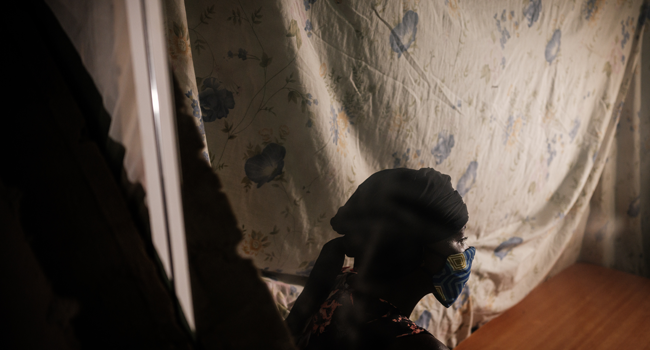
teenagers who fall pregnant every year in Kenya,
Implementing comprehensive sexuality education in Kenya is a
persistent challenge, drawing fierce pushback from religious
institutions and conservative groups.
A 2017 analysis by the Guttmacher Institute found that, while
various policies exist to provide sexual education in Kenya, topics
are limited and do not include information on contraception.
It noted that “messages conveyed to students were reportedly
fear-inducing and judgemental or focused on abstinence, emphasising
that sex is dangerous and immoral for young people.”
Meanwhile, the topic is taboo at home.
“Let us not lie to ourselves, our kids are having sex,” said
Ritah Anindo, 22, a youth advocate for the NGO Reproductive Health
Network Kenya.
“Now children are at home, they are not studying. Rich kids,
probably they are having online classes but kids in (poor
communities), what are they doing?” Anindo said.
“Our kids are idle so what do you expect at the end of it all?
Teenage pregnancies, new HIV infections, unsafe abortion.”
For many girls like Linnet, hopes of ever returning to school
will be fully dashed once they give birth.
“Most of them will not be able to go back to school… it requires
a lot of support, financial support, emotional support,” Anindo
said.
“We may have more teenage pregnancies than COVID cases and it is
so sad.”
AFP
Read more https://swordpress.com.ng/2020/08/03/cases-of-teen-pregnancy-rise-in-kenya-amid-pandemic/