

taken on September 28, 2011 the Amazon logo is seen on a podium
during a press conference in New York. Emmanuel DUNAND /
AFP
Amazon on Tuesday unveiled a new biometric payment
system using palm recognition, to be made available to rival
retailers and also promoted as a replacement for badge entry at
stadiums or workplaces.
The system called Amazon One was touted as “a fast, convenient,
contactless way for people to use their palm to make everyday
activities like paying at a store, presenting a loyalty card,
entering a location like a stadium, or badging into work more
effortless.”
The US technology giant said it would be installing the system
at its Amazon Go retail locations, starting with two stores in its
hometown of Seattle, Washington.
READ ALSO: India’s Richest Man Takes On Amazon,
Walmart In E-Commerce Gamble
Amazon vice president Dilip Kumar said the system was developed
as “a quick, reliable, and secure way for people to identify
themselves or authorize a transaction while moving seamlessly
through their day.”
Amazon One uses each individual’s “unique palm signature,” an
alternative to other biometric identifiers such as fingerprint,
iris or facial recognition.
“No two palms are alike, so we analyze all these aspects with
our vision technology and select the most distinct identifiers on
your palm to create your palm signature,” Kumar said in a blog
post.
In Amazon Go stores, the palm-waving system will be added to the
store’s entry gate as an option for shoppers.
“In most retail environments, Amazon One could become an
alternate payment or loyalty card option with a device at the
checkout counter next to a traditional point of sale system,” Kumar
added.
(adsbygoogle = window.adsbygoogle || []).push({});
The company said it was “in active discussions with several
potential customers,” which could include other retailers, but
offered no details.
Biometric blues
The announcement comes amid rapid growth in the use of biometric
payments ranging from fingerprint verification on smartphones to
more sophisticated systems using facial recognition.
China’s Alipay — the financial arm of ecommerce giant Alibaba —
has been using a “Smile-to-Pay” system, with a machine roughly the
size of an iPad, for retailers.
The shift has also raised privacy concerns about how biometric
data will be safeguarded and protected from hackers.
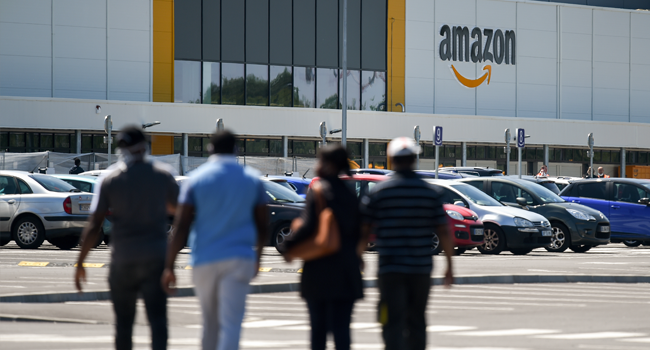
company’s centre in Bretigny-sur-Orge on May 19, 2020 as Amazon
France partially reopens amid the pandemic of the novel coronavirus
(COVID-19). Eric PIERMONT / AFP
Amazon said the biometric data would be “protected by multiple
security controls and palm images are never stored on the Amazon
One device” but send to a “highly secure area we custom-built in
the cloud.”
Doug Stephens of the consulting firm Retail Prophet, said Amazon
would need to protect the data to gain user trust in the system to
make it mainstream.
“Biometrics as a form of ID/payment etc. has always made
ultimate sense,” Stephens said on Twitter. “The question is, will
Amazon mainstream our comfort with them or violate our trust?”
AFP
Read more https://swordpress.com.ng/2020/09/30/amazon-unveils-payment-by-hand-waving/