
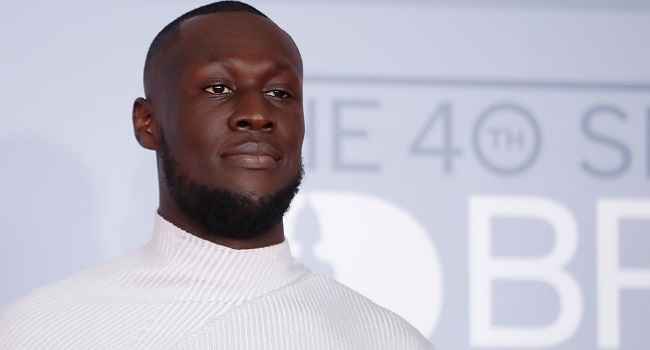
Going to Cambridge had always been a dream for Matthew
Omoefe Offeh, one of a growing number of black students who are
slowly reshaping the elite university’s racial mix, helped in part
by rapper Stormzy.
The 18-year-old from Luton, north of London, has just started an
engineering course at Cambridge’s Magdalene College, which traces
its roots to 1428 and whose illustrious alumni include the
17th-century diarist Samuel Pepys.
Offeh has benefited from Target Oxbridge, a free coaching
programme that looks to open up Oxford and Cambridge to more
working-class and minority students.
Oxford and Cambridge are the two oldest and most prestigious
British universities, synonymous with educating the sons and
daughters of the establishment from Britain and around the
world.
“Some people think that they won’t fit in, that Cambridge isn’t
a place for black students,” Offeh told AFP.
“If you show your passion for your subject and your ability to
do it, then you should be fine,” he said.
Offeh is among 137 black undergraduates who started at Cambridge
this academic year — a 50-percent increase on last year and a huge
jump on 2015, when the number was a paltry 38.
The increase has brought the proportion of black undergraduates
in this year’s intake to 4.6 percent. That compares to 3.3 percent
of black people in the overall population, according to the last
census in 2011.
“That’s the highest figure we have ever had,” said Professor
Graham Virgo, senior pro-vice chancellor at the university.
“We’ve been working very hard to encourage more black students
to apply… we have known that black students are under-represented
in the university,” he said.
– Breaking glass ceilings – UK universities have been criticised
for a lack of diversity and opportunities for black and minority
ethnic (BAME) students and staff.
In June at the height of the Black Lives Matter protests,
Britain’s first BAME female cabinet minister Valerie Amos said
there was “deep structural and systemic discrimination” in higher
education.
Cambridge postgraduate student Nia-Cerise Conteh has tweeted
about her experiences of physical and verbal assaults.
On a BBC documentary aired this month called “Being Black at
Cambridge”, she described being racially abused by a university
staff member on a train.
Depressed at a lacklustre response from the university, she had
thought of dropping out, but said through tears: “I’m fighting for
every other black person who I know, who needs to occupy these
spaces.
“Black people need to know that they need to get here so that we
can pave the way for others. And we need to break that glass
ceiling,” Conteh said.
(adsbygoogle = window.adsbygoogle || []).push({});
Cambridge said it took all such incidents seriously, and urged
any affected students to come forward.
The university’s intake has traditionally favoured pupils from
wealthy private schools over inner-city state establishments.
But it has tried to encourage those from less well-off
backgrounds to apply with information campaigns, scholarships and
outreach on social media.
Grime music star Stormzy launched a scholarship in 2018 to
support black students at Cambridge who cannot afford the annual
tuition fees of about £9,000 (nearly $12,000 or 10,000 euros) and
the living costs.
Initially Stormzy proposed the scheme to Oxford, which he says
turned him down. This year, he is offering two Cambridge
scholarships worth £18,000 ($23,000 or 19,000 euros).
“Clearly that’s been really important for those students. But
also, it’s really raised the profile” of the university among
potential applicants, Virgo said.
– ‘Decolonise’ libraries – Wanipa Ndhlovu is in her third year
studying law at Trinity College, Prince Charles’ alma mater and the
grandest of all the university’s constituent colleges.
She said the growth in numbers of black students at Cambridge
had been visible.
“The change from my first and my second year was really, really
substantial,” the 20-year-old told AFP. Looking at younger year
groups, she felt “it’s much easier for them to integrate”.
Ndhlovu was born in Zambia and said she had experienced the same
kind of “micro aggressions and ignorance” at Cambridge as growing
up in York, northern England.
She admitted to being overwhelmed by Cambridge’s imposing
buildings, and worried that she would not meet anyone who was like
her.
The killing by police of George Floyd in the United States,
which sparked the wave of Black Lives Matter protests across the
world, “brought to my attention again that there’s so many people
who, no matter what I do, no matter what I achieve, just won’t see
me as equal”.
Virgo said he has met many students who want university
authorities to take action in light of the protests.
That meant ensuring “their voice is heard in the classroom, what
we study — and we really are looking at our curriculum to make sure
that black voices and black experience is reflected”.
The university’s response also includes a programme to
“decolonise” its vast central library, to try to diversify and
widen its collections.
Read more https://swordpress.com.ng/2020/10/29/backed-by-stormzy-cambridge-bids-to-woo-black-students/