
 image
imagecopyrightTeslim Omipidan
In our series of
letters from African journalists, novelist and journalist Adaobi
Tricia Nwaubani looks at a young man’s passion for the
past.

There are many events in Nigeria’s history which 23-year-old
Teslim Omipidan wishes every Nigerian to know.
For example, in October 1961, a young American woman, Margery
Michelmore, was attending Peace Corps training at the University of
Ibadan in south-western Nigeria.
A postcard she wrote to a friend back home described the
“squalor and absolutely primitive living conditions” of her new
environment.
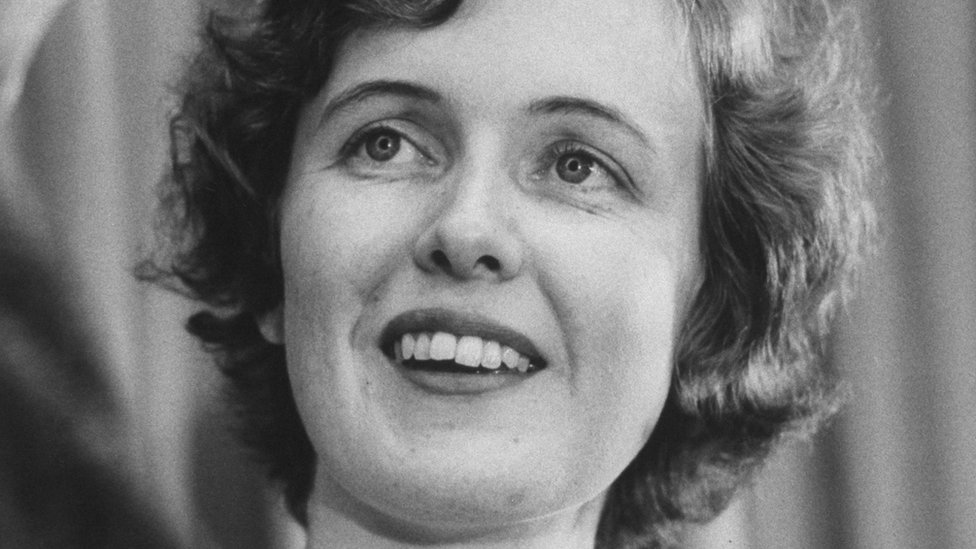 image copyrightThe LIFE Images
Collection via Getty Images
captionMargery Michelmore’s infamous postcard sparked an
international incident in 1961
A Nigerian saw the postcard before it was mailed; distributed
photocopies around the campus – sparking riots from the students
who found the private message outrageous, and an international
incident that eventually drew the involvement of then US President
John F Kennedy.
Nearly 15 years later, in February 1976, the Lagos Lawn Tennis
Club in Nigeria’s former capital city was packed with middle-class
Nigerians and expatriates, who had gathered to watch two US
professionals, Wimbledon champion Arthur Ashe and Jeff Borowiak,
play.
The Ashe v Borowiak match was black Africa’s first professional
tennis tournament, part of the World Championship Tennis Pro
Circuit series. The winner would take home $60,000 – the equivalent
today of about $517,000 (£385,000).
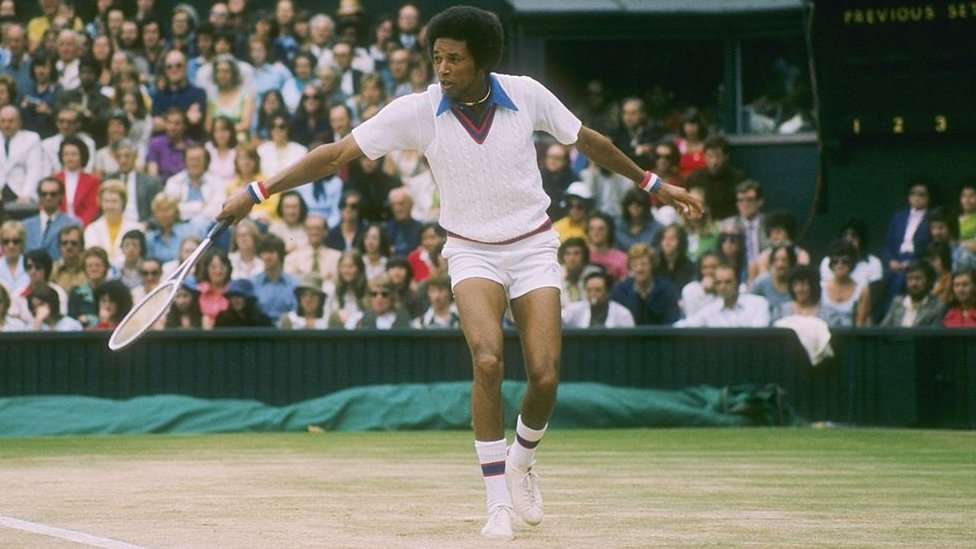 image copyrightGetty Images
captionArthur Ashe was the reigning Wimbledon champion at
the time of the Lagos incident
But Nigeria’s beloved military ruler, Murtala Muhammed, had been
assassinated in a failed coup three days earlier, on 13 February.
Shortly after the game began, five men strolled on to the court –
four of them in military uniform.
“What are you doing?” yelled one of the soldiers. “We are
mourning, you are making money. Are you all mad? Please, go.”
While a soldier shoved his weapon into Ashe’s back and led him
off the court with his hands raised in the air, the spectators
scrambled from their seats and fled
These are just two of about 2,000 stories that Mr Omipidan has
so far catalogued on his Old Naija blog, which he describes as “the
home of Nigerian history and culture”.
“My goal is to reach as many Nigerians as possible, at home and
abroad, to educate them,” said Mr Omipidan, who has just completed
a degree in mass communications at the Adekunle Ajasin University
in south-western Ondo State.
From scrapbook to
blog
His love for writing and information dates back to when he was
five years old, accompanying his father, a printer in Ibadan, to
work during school holidays – spending endless hours reading from
the variety of books he produced.
Around the age of 10, Mr Omipidan started a makeshift book of
his own. He cut out history-related photographs from newspapers and
glued them to a notebook, then researched and wrote stories about
each image.
By the time he was 17, he was keen to share with the world the
information he amassed.
“That’s how the idea of a blog started,” he said. “I started it
in 2014.”
Nwaubani
A few years ago, there was an outcry in Nigeria when history was
removed as a subject in secondary schools, with students expected
to learn any related topic under civic studies”

Mr Omipidan scours libraries, newspaper archives, history books
and the internet for content.
He is particularly inspired by the work of Nigerian historians
Amanda Kirby Okoye, Max Siollun, and Toyin Falola.
The process of producing content for Old Naija has sometimes
been life changing for Mr Omipidan.
He had heard about the Nigerian civil war of 1967 to 1970 –
sparked by an attempt by the Igbo ethnic group to secede and form a
new nation called Biafra – but he had not realised the scale of
bloodshed and devastation until he was researching the story in
2015.
He was particularly shocked at the role played by ethnic
hatred.
“I was thinking: so, my country had this kind of past and we
still go about today playing with the things that can bring this
back?” he said.
(adsbygoogle = window.adsbygoogle || []).push({});
“Since then, I’ve been conscious of what I say online when it
comes to any ethnic-related argument or discussion because a small
thing can start something bigger.
“The story changed the way I see other ethnicities, the way I
perceive them, the way I relate with them.”
Mr Omipidan believes that more Nigerians would adopt this
cautious attitude if they also knew more details of the war.
A few years ago, there was an outcry in Nigeria when history was
removed as a subject in secondary schools, with students expected
to learn any related topic under civic studies.
The government eventually bowed to pressure from intellectuals
and returned history as a standalone subject. Mr Omipidan is glad
to note that the Biafran war is part of the new history curriculum,
unlike when he attended secondary school a few years ago.
“As the saying goes, those who don’t know their history are
bound to repeat it,” he said.
A hobby that
pays
Six years after he founded Old Naija as a teenager, the blog,
which he runs from his home in Ibadan, now employs two writers and
has 300,000 unique visitors a month.
The most popular story he has published so far is the “Ghana
Must Go” saga of 1983, which describes how the Nigerian government
deported more than two million African migrants, mostly Ghanaians,
who had sought greener pastures in the country during the oil boom
of the 1970s. That post has been viewed more than a million
times.
The second most popular story, with about 500,000 views, is the
Clifford Constitution of 1922, which paved the way for Nigeria’s
first political parties and allowed Nigerians to vote for the first
time. (Only adult males, who earned an annual income of at least
£100 at the time, were eligible).
“People used to tell me that nobody reads history,” Mr Omipidan
said, “but I’m now feeling convinced that people do.”
His blog also fetches
him a tidy income, which comes in handy as he waits for Nigerian
lecturers to call off their months’ long strike, so that he can at
last collect his certificate and consider himself no longer a
student after completing his final exams more than a year ago in
2019.
“I see the income as a bonus coming from my hobby,” he said. “I
have always loved history since I was a boy. It is the genuine love
that has kept me going for years without stopping.”
He hopes to someday launch a podcast or radio station, through
which he can share his passion with more people.
Omipidan
I tend to keep my own opinions out of history. It is better to
leave your opinions out and allow people judge for themselves.”
Back in 1961, acclaimed American writer John Updike, absolved
Margery Michelmore of blame in the postcard incident.
“Miss Machelmore did not sin in saying in a personal missive
that she was startled, coming fresh from Foxboro, Massachusetts, to
find the citizens of Ibadan cooking in the streets,” he wrote in
the 28 October issue of that year’s The New Yorker.
“And the fellow student who picked up the dropped card and,
instead of mailing it, handed it to the local mimeographer seems
guilty of a failure of gallantry. One may or may not cook in the
streets, but one does not read other people’s mail and then
demonstrate because it is insufficiently flattering.”
Mr Omipidan, on the other hand, abstains from providing
commentary on the stories he posts.
“I tend to keep my own opinions out of history,” he said.
“It is better to leave your opinions out and allow people judge
for themselves.”
Read more https://swordpress.com.ng/2020/12/28/the-nigerian-blogger-scouring-the-past-to-inform-the-future/