

Macron (C), surrounded by Lebanese servicemen, visits the
devastated site of the explosion at the port of Beirut, on August
6, 2020 two days after a massive explosion devastated the Lebanese
capital in a disaster that has sparked grief and fury. Thibault
Camus / POOL / AFP
Lebanon’s under-fire political leaders scrambled into
action as French President Emmanuel Macron was expected Monday for
a fresh visit aimed at pushing change in the crisis-hit
country.
Macron was due to return less than a month after a landmark
visit following the deadly Beirut port blast that traumatised
Lebanon and renewed calls for a radical overhaul of the political
system.
Parliamentary consultations at the presidential place on a new
prime minister started on Monday morning, with most of the ruling
elite’s top barons apparently settling on a little-known diplomat,
Lebanon’s ambassador to Germany Mustapha French President Emmanuel
Macron (C), surrounded by Lebanese servicemen, visits the
devastated site of the explosion at the port of Beirut, on August
6, 2020 two days after a massive explosion devastated the Lebanese
capital in a disaster that has sparked grief and fury. Thibault
Camus / POOL / AFP.
Already dismissed by the opposition as a product of Lebanon’s
reviled sectarian-based politics, Adib faces the daunting task of
steering the state through one of the deepest crises of its
troubled 100-year history.
The Beirut blast, one of the largest non-nuclear explosions in
history, is widely blamed on government greed and incompetence and
compounds the collapse of Lebanon’s economy over the past few
months.
A vast stockpile of ammonium nitrate that had languished at
Beirut’s port for years blew up on August 4, killing at least 188
people, wounding thousands and laying waste to large parts of the
capital.
Macron demanded “deep change” when he visited Beirut on August 6
and warned then he would check on progress when he returns for the
September 1 ceremony marking the centenary of Greater Lebanon.
President Michel Aoun and his political ally, Hezbollah leader
Hassan Nasrallah, both expressed willingness in separate speeches
Sunday to change the way Lebanon is governed.
New premier
The 85-year-old Aoun, a hate figure in the protest camp who
regards him as deaf to calls for change, even urged the
proclamation of a secular state.
Suspicion was rife however that Lebanon’s long-serving
heavyweights were only paying lip service to reform ahead of
Macron’s visit, expected to start around 1700 GMT.
“When the political class talks about the introduction of the
civil state, it reminds me of the devil talking about virtue, it
doesn’t make sense,” said political science professor Hilal
Khashan.
“There is a big difference between raising a slogan and really
putting it to work,” said the academic from the American University
of Beirut.
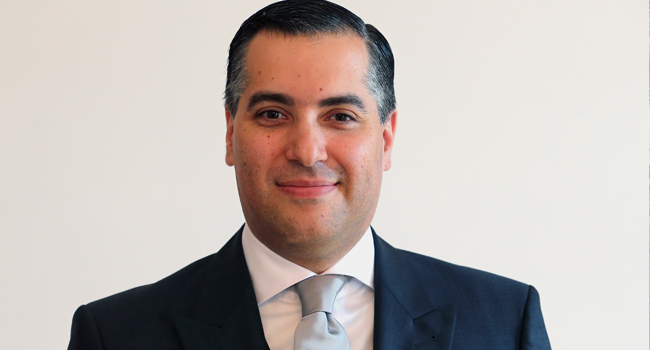
2013, shows Lebanon’s ambassador to Berlin Mustapha Adib
(Adib-Abdul-Wahed) posing for a picture, upon his appointment to
the position, in Bellevue Castle in the German capital Berlin.
WOLFGANG KUMM / DPA / AFP
Adib’s designation “will not usher in a new period in Lebanese
history and I don’t think it will put Lebanon on the road of
genuine political development.”
(adsbygoogle = window.adsbygoogle || []).push({});
Adib emerged as a consensus option on Sunday.
The 48-year-old diplomat and close aide to former prime minister
Najib Mikati received backing from the country’s Sunni Muslim
political heavyweights.
Adib still needs to be formally approved during Monday’s
consultations, but enough major factions endorsed him for his
nomination to go through.
The only major dissenting voice within the political
establishment came from the Lebanese Forces party which backed
instead Nawaf Salam, an independent diplomat who also served as a
judge at the International Court of Justice.
Under multi-confessional Lebanon’s political system, the premier
must be a Sunni, the presidency is reserved for a Maronite
Christian and the post of parliamentary speaker goes to a
Shiite.
No grace period
A majority of lawmakers must decide on whom to name as premier
before Aoun tasks the candidate with forming a new government, a
process that can take months.
Lebanon’s last government, headed by Hassan Diab, resigned after
the massive explosion.
The deadly blast, blamed on decades of negligence and corruption
by the country’s ruling elite, revived calls at home and abroad for
radical revamp of the state.
It also sparked demands for an international probe into the
blast, which were however met with objections from political
leaders.

towards security forces during clashes in downtown Beirut on August
8, 2020, following a demonstration against a political leadership
they blame for a monster explosion that killed more than 150 people
and disfigured the capital Beirut. (Photo by STR /
AFP)
Those who have taken to the streets in mass protests since
October 17 against the politicians they deem corrupt and inept have
already rejected any name that might emerge from the parliamentary
consultations.
Despite promises of change, the process of forming the new
government follows the same blueprint that has chronically mired
Lebanon in political deadlock.
Social media networks abounded with posts questioning whether a
government formed by Adib would be any more effective than Diab’s,
which was formed in January but failed to lift the country out
of crisis.
Hassan Sinno, a member of the Massirat Watan opposition group,
said the political class’s new choice for the job of prime minister
would not be given the same grace period Diab enjoyed.
“We won’t give him the time, like some of us made the mistake of
doing for Hassan Diab,” he told AFP. “We can’t afford it this
time.”
On the eve of Lebanon’s sombre centenary, many citizens were
planning to leave the country and asked whether Lebanon would live
to be 101.
French Foreign Minister Jean-Yves Le Drian argued last week that
only serious reforms could save Lebanon, warning that “the risk
today is of Lebanon disappearing”.
AFP
Read more https://swordpress.com.ng/2020/08/31/lebanon-to-choose-new-prime-minister-as-macron-visits-again/