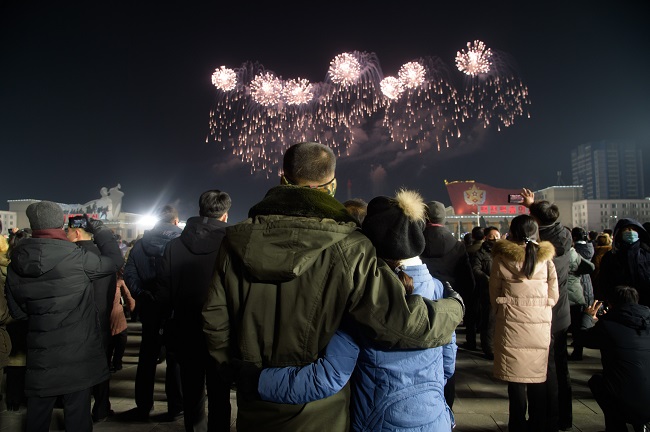
display during New Year celebrations at Kim Il Sung square in
Pyongyang on January 1, 2021. (Photo by KIM Won Jin /
AFP)
Britain on Friday began a new year and life outside
Europe, after leaving the bloc’s single market trading rules to go
it alone for the first time in nearly half a century.
Brexit, which has dominated politics on both sides of the
Channel since 2016, became reality an hour before midnight, ending
the UK’s 48-year obligation to follow Brussels’ rules.
Free movement of over 500 million people between Britain and the
27 EU states ended.
More rigorous customs checks returned for the first time in
decades, despite the hard-fought brokering of a tariff- and
quota-free trade deal.
New Year’s Day newspapers reflected the historic but still
deeply divisive change, which will have repercussions for
generations to come.
The pro-Brexit Daily Express’ front-page photograph showed the
White Cliffs of Dover — an enduring symbol of Britishness — with
“Freedom” written on a Union flag.
“Our Future. Our Britain. Our Destiny,” its headline said.
The pro-EU Independent, though, was less sure: “Off the hook —
or cut adrift?” it asked, reflecting widespread uncertainty at the
path the country had now chosen.

first vehicle entering the Eurotunnel terminal post Brexit, an
Estonian lorry driver, on January 1, 2021, in Coquelles, northern
France. (Photo by Lewis Joly / POOL / AFP)
As dawn broke on 2021, attention turned to Britain’s borders,
particularly its key Channel seaports, to see if the end to
seamless trade and travel would cause delays and disruption.
But with New Year’s Day a public holiday followed by a weekend,
and the government having announced the phased introduction of
checks, few immediate problems were envisaged.
“The traffic forecast for the next few days is very light,” said
John Keefe, spokesman for Eurotunnel, which transports freight,
cars and coaches under the Channel.
Practical changes
From Monday, more truckers transporting goods to and from
mainland Europe face the new rules, including permits to even drive
on the roads leading to Channel ports like Dover.
The Road Haulage Association, an industry body, estimates that
some 220 million new forms will now need to be filled in every year
to allow trade to flow with EU countries.
“This is a revolutionary change,” Rod McKenzie, managing
director of public policy at the RHA, told The Times newspaper this
week.
Other practical changes include how long Britons can visit their
holiday homes on the continent, to travel with pets, and an end to
British involvement in an EU student programme.
Holidaymakers and business travellers used to seamless EU travel
could face delays, although fears Britons will have to get
international permits to drive in Europe were averted by a separate
accord.
British fishermen are disgruntled at a compromise in the free
trade agreement to allow continued access for EU boats in British
waters, which has raised fears of clashes at sea.
(adsbygoogle = window.adsbygoogle || []).push({});
The key financial services sector also faces an anxious wait to
learn on what basis it can keep dealing with Europe, after being
largely omitted from the trade deal along with services in general,
which account for 80 percent of Britain’s economy.
In Northern Ireland, the border with Ireland will be closely
watched to ensure movement is unrestricted — key to a 1998 peace
deal that ended 30 years of violence over British rule.
And in pro-EU Scotland, First Minister Nicola Sturgeon gave a
clear sign of a looming battle ahead for a new vote on
independence.
“Scotland will be back soon, Europe. Keep the light on,” she
tweeted.
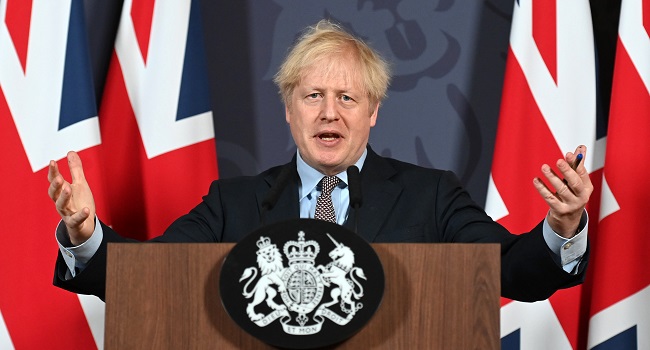
Johnson gestures as he holds a remote press conference to update
the nation on the post-Brexit trade agreement, inside 10 Downing
Street in central London on December 24, 2020. (Photo by Paul
GROVER / POOL / AFP)
‘Make the most of it’
Despite the uncertainty, Prime Minister Boris Johnson is
bullishly optimistic, describing the culmination of Brexit as an
“amazing moment” for the country.
He vowed that post-Brexit Britain, despite being battered by a
surge in coronavirus cases, would be an “open, generous,
outward-looking, internationalist and free-trading” country.
“We have our freedom in our hands and it is up to us to make the
most of it,” he added in a New Year’s message.
The divisions over Brexit, both political and social, remain
deep and are likely to last for years, despite a muted end to the
saga overshadowed by the global health crisis.
Opinion polls indicate that most Britons want to move on and are
far more worried about the worsening coronavirus pandemic, which
has left more than 73,500 dead in Britain alone.
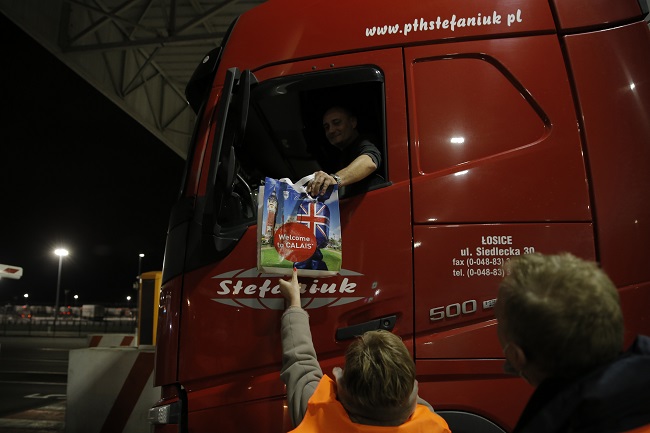
the second vehicle entering the Eurotunnel terminal post Brexit, a
Polish lorry driver, on January 1, 2021, in Coquelles, northern
France. – Britain on Thursday finally severed its turbulent
half-century partnership with Europe, quitting the EU single market
and customs union and going its own way four-and-a-half years after
its shock vote to leave the bloc. Brexit, which has dominated
politics on both sides of the Channel since 2016, became a reality
as Big Ben struck 11:00 pm (2300 GMT) in London, just as most of
mainland Europe ushered in 2021. (Photo by Lewis Joly / POOL /
AFP)
Johnson, who survived several days in intensive care with Covid
last April, warned of tough times ahead but said a UK-developed
vaccine offered grounds for hope.
But his desire for a prosperous, more globally focused Britain
could yet see a resurgence of Brexit wrangling, as the country
finds out what its new trading terms mean in reality.
Read more https://swordpress.com.ng/2021/01/01/new-year-new-rules-uk-begins-post-brexit-future/