anti-brutality protest 05:54
‘They pointed their guns at us and started
shooting’
How a bloody night of
bullets and brutality quashed a young protest movement
Updated 0508 GMT (1308 HKT) November 18,
2020
This
story contains graphic imagery of injury and death. The full names
of some interviewees and the identities of others have been
withheld for their safety.
Sometime after midnight on October 21, Elisha Sunday Ibanga
answered a phone call from his older brother’s number. The person
on the other end of the line — a stranger — broke the news that
Ibanga’s brother, Victor, had been shot dead at the Lekki toll
gate, in Lagos, Nigeria, where he had been peacefully protesting
against police brutality earlier that night. “The person told me
that the police took his body away,” Ibanga, 24, told CNN. An
eyewitness to Victor Sunday Ibanga’s death told CNN the 27-year-old
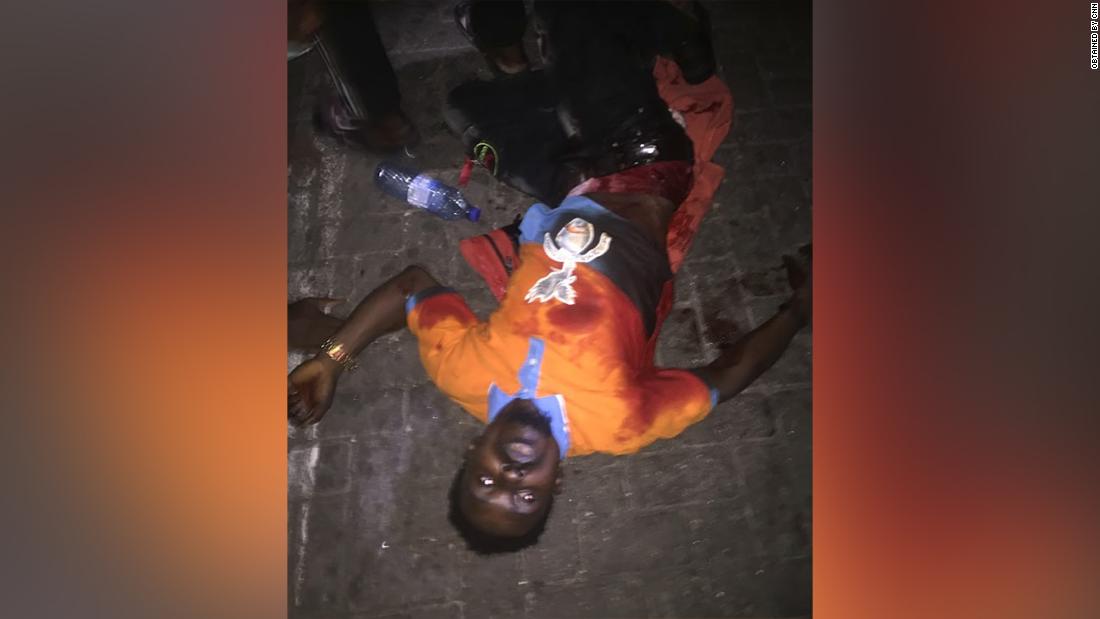
entrepreneur was shot in the head during the protest. CNN has
obtained and geolocated a photograph of Victor’s body lying in a
pool of blood and wrapped in the white and green of the Nigerian
standard — one of the same flags gripped by fellow protesters
earlier in the evening as they sang the country’s national anthem.
Ibanga confirmed the photograph is of his brother.

Sunday Ibanga is pictured in a pool of blood.
families yet to locate the bodies of their missing loved ones —
protestors at the toll gate — who dozens of eyewitnesses say were
shot at, first by members of the Nigerian army and then hours later
by police. Eyewitnesses told CNN they saw the army remove a number
of bodies from the scene.
into the early hours of October 21, at the eight-lane Lekki toll
gate — a key piece of Lagos’ road network — has stunned the
country.
have told CNN it was a “massacre” with multiple people killed and
dozens wounded. But local authorities have downplayed that
account.
Sanwo-Olu, admitted to CNN that footage showed uniformed soldiers
firing on peaceful protesters but claimed only two demonstrators
were killed. But, he then said there was “not a scratch of blood”
at the toll gate when he visited. The governor said no families had
approached authorities saying they were missing relatives.
shooting, the army denied any involvement, describing reports of
the incident as “fake news,” before backtracking and saying that
soldiers were present but fired their weapons in the air and used
blanks, not live rounds.
have not been returned. But on November 14, during a judicial
inquiry into the shooting, army representative Brigadier Ahmed
Taiwo said, “There’s no way officers and men will kill their
brothers and sisters. I repeat no way. We have those who constantly
seek to drive a wedge between us and between the citizens of
Nigeria…”
that it was the governor who called soldiers to the scene because
the police were overrun. The governor has denied this, saying he
does not have the authority to call in the army. The army has
continued to restate that they did not fire live rounds.
the disputed events has cast doubt on authorities’ shifting and
changing statements.
scene match those used by the Nigerian army when shooting live
rounds, according to current and former Nigerian military
officials. Verified video footage — using timestamps and data from
the video files — shows soldiers who appear to be shooting in the
direction of protesters. And accounts from eyewitnesses establish
that after the army withdrew, a second round of shooting happened
later in the evening.
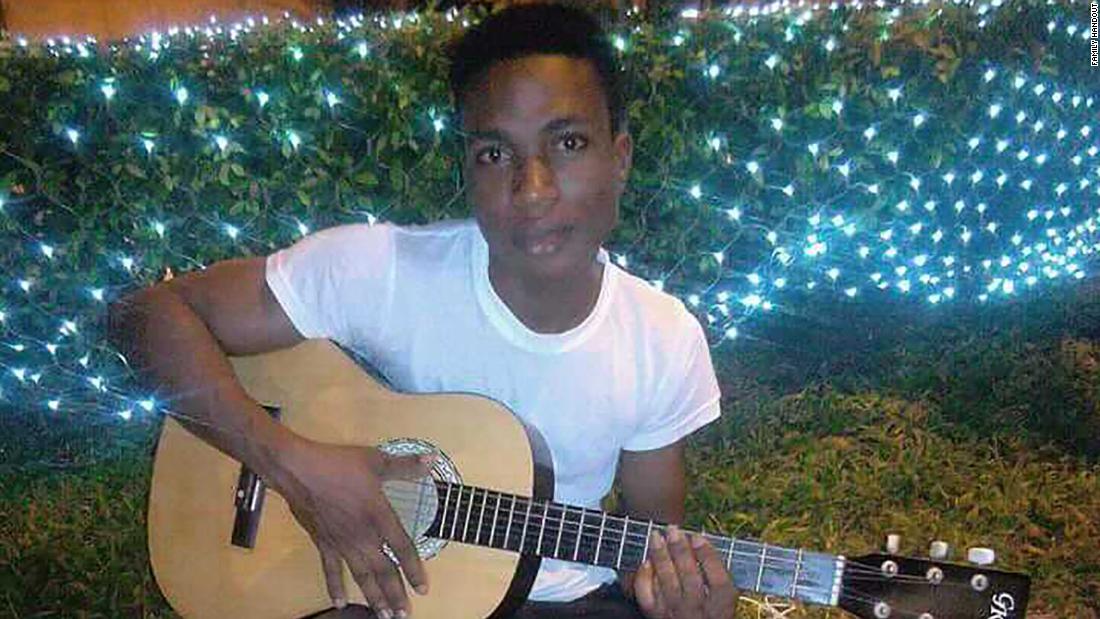
Ibanga
of his brother’s death, he has been visiting hospitals in a
desperate search for his remains.
family are in prayer, just to see if we can find out and know where
my brother’s dead body is,” he said.
nowhere to be found.
younger brother Wisdom, 18, since he went to the protest the night
of the shooting.
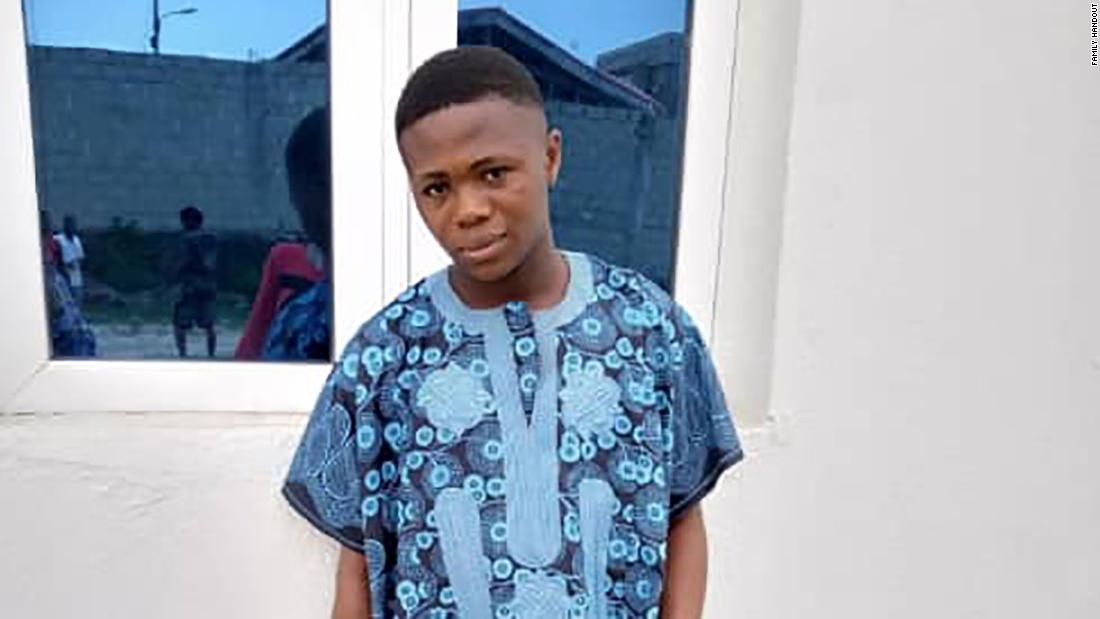
that Tuesday, ate his food and went there,” Okon told CNN.
arrive home that night. By the next morning, Okon was out searching
for him. “I’ve gone to hospitals, I’ve gone to police stations,
I’ve gone to everywhere. I can’t find him,” she said.
a few weeks before the protest — Okon had helped him find a job as
a cleaner at a bank. She says he didn’t know anyone at the protest
and had never been to one before.
authorities to tell her if her brother is alive and detained or
dead.
followed weeks of “#EndSARS” protests against police brutality that
had burst onto the streets of cities across Nigeria.
of young Nigerians mostly under 30 — a demographic that makes up
40% of the country’s population — protested, with calls for an end
to the Special Anti-Robbery Squad, a police unit widely and
repeatedly accused of kidnapping, harassment and extortion.
controversial unit but protests continued. It would be the fourth
time it was being disbanded.
candlelight vigils, multi-faith prayer sessions and DJ performances
that attracted backing and solidarity from celebrities, the
Nigerian diaspora and supporters around the world. The movement
quickly widened beyond police brutality to other grievances —
capturing the frustrations of a young population demanding an end
to bad governance in the oil-rich country.
of Lagos, and the toll gate became a focal point of the
movement.
protests, the demonstrations were hijacked by “thugs and sponsored
hoodlums” who attacked protesters, causing deaths and injuries,
according to Amnesty International Nigeria.
before the shooting, Governor Sanwo-Olu imposed a strict curfew
starting at 4 p.m. following looting and vandalism in other parts
of the state.
allow commuters to get home. The timeline for when the curfew was
imposed has become a point of contention between the Governor and
the military. The army said their soldiers were unaware of the
change to the later time, according to the army spokesperson’s
testimony to the eight-person judicial panel on November 14.
service providers were to be allowed on the streets of the
20-million strong city.
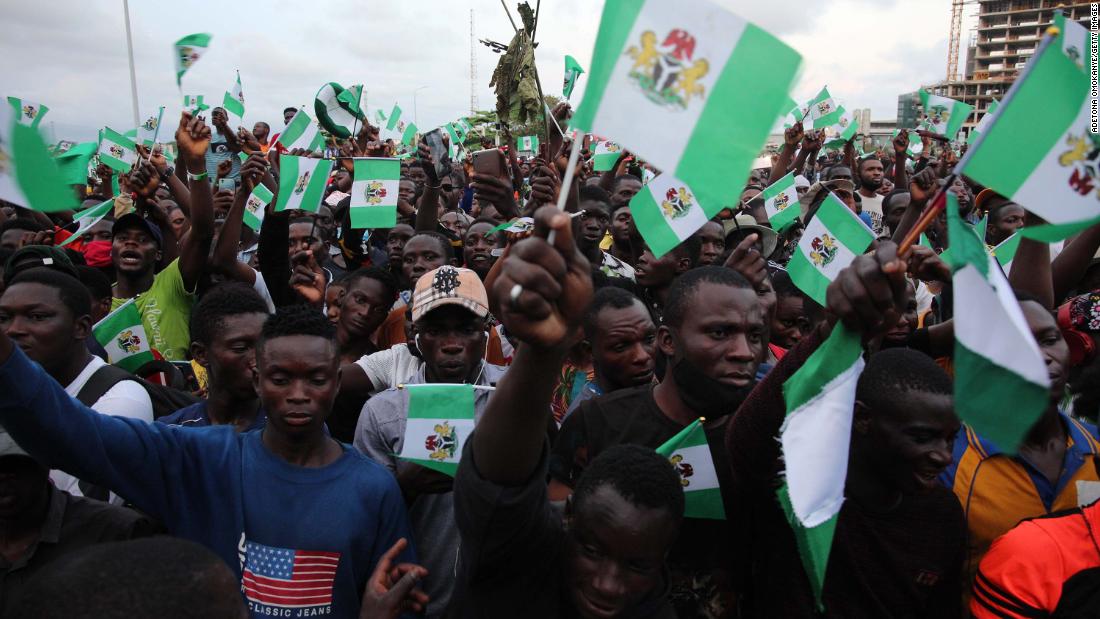
police brutality at the Lekki toll gate on October 20.
eyewitnesses and family members interviewed by CNN and a forensic
examination of hours of video and dozens of photographs captured
before, during and after the two shooting incidents show how a
fledgling protest movement was all but extinguished by the very
thing Nigerians were demonstrating against.
original curfew time came into effect, army trucks left the Bonny
Camp barracks on Victoria Island and headed towards the toll gate
plaza and the protesters, according to videos reviewed by
CNN.
soldiers arriving in a Toyota Hilux pickup truck with “OP Awatse”
written on it — the name of a joint military task force that
operates in Lagos State.
army trucks approaching the protesters from both sides of the toll
gate — barricading them in.
real name is Obianuju Catherine Udeh, was streaming live on
Instagram when it all happened and the shooting began.
immediately, with no warning given. Panic ensued as protesters
attempted to flee.
"cnnix-golf__pullquote m-infographic-- js-whitelist">“Please explain to me how,
in which part of the world, do you go to a protest with live
bullets.”DJ Switch
and he just… he fell, and we looked at him. He was shot in the
back,” DJ Switch, 29, told CNN, as she tried to talk during an
interview while crying.
part of the world, do you go to a protest with live bullets,” she
said.
(adsbygoogle = window.adsbygoogle || []).push({});
pieced together a timeline that shows that shooting by the army
lasted from 6:43 p.m. until at least 8:24 p.m., according to video
evidence.
101 minutes tell a story of terror and chaos. They show graphic
injuries and people bleeding on the ground.
name we’re not publishing for her safety, told CNN that the
soldiers shot in the air but also directly at protesters.
they started shooting,” she said. “They were shooting in the air,
they were shooting at us, they were shooting everywhere.”
protesters” and “End Sars, we no go gree [pidgin for we will not
agree, or give in].”
shooting,” another person screams in one of the videos. Cries of
“Na lie, na lie [exclamations of disbelief in pidgin]” can also be
heard.
and verified by CNN, some of the protesters can be seen carrying
bodies, the flashlights on their phones the only thing illuminating
the darkness as the sound of ambulance sirens wail in the
background. It is not known whether these were dead or injured
protesters.
injured people, some on the ground bleeding while defiant
protesters continued to wave Nigerian flags.
confirmed were present at the toll gate started arriving in local
hospitals — carried by civilians — from 7:19 p.m. while the
shooting was still ongoing, according to videos analyzed by
CNN.
protesters, Mathew, pictured, says he was injured when the army
opened fire at Lekki toll gate. Using metadata, CNN geolocated the
image to the protest location at 6:50 pm.
footage from one man who used his car as a makeshift ambulance and
transported people to hospital.
executive medical director at Grandville medical center, told CNN
he and his colleagues received around 15 injured people that night
with various gunshot wounds and cuts. None of the people they
treated died, he added.
other hospitals,” Dr. Aranmolate said. “One of the victims had to
have his leg amputated.”
taken to hospital with gunshot wounds, and that they only shot into
the air.
panel, the army spokesman Brigadier Ahmed Taiwo continued to deny
that anyone was shot.
ambulances were prevented from reaching the scene by the
authorities.
according to metadata, shows ambulance workers in a van at the
scene saying they are unable to get through.
findings of this investigation, a Lagos State government spokesman
declined to comment. “Talking about that subject now will be
sub-judicial since the matter is already before a panel of inquiry.
Until the panel concludes its investigation, the subject will not
be open to any discussion or comment by any State official,” the
spokesperson said.
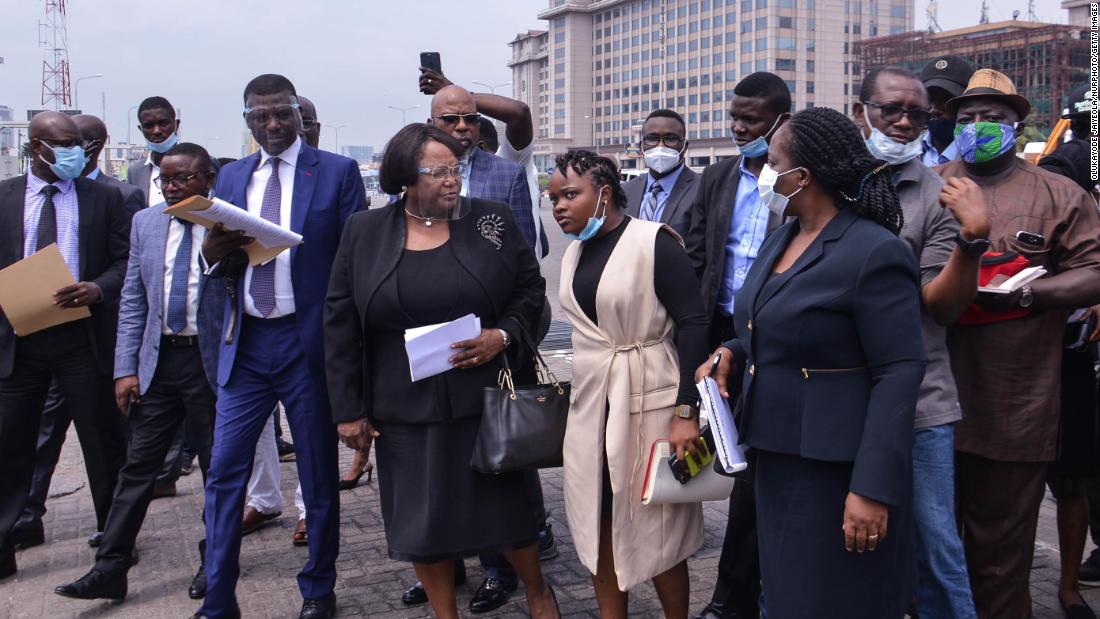
judicial panel visit the Lekki toll gate on October 30.
see what was happening which is why she started broadcasting.
and twist the story. I wanted people to see. So, I just went
live.”
there were attempts to resuscitate a man in red clothing who had
passed out.
helping to extract a bullet lodged in another man’s thigh as he
screams in agony. Someone in the crowd says, “you will live, you
will not die.”
are still trying to apply CPR on the man in red, while DJ Switch
can be heard saying, “this guy is dying.”
lifted bodies with bullet wounds and put them at the soldiers’
feet.
Why are you doing this,” she said. “He expressly told me: ‘I am
acting on orders from above.’”
found at the scene and confirmed with current and former Nigerian
military sources that the bullet casings match those used by the
army. Two ballistics experts have also confirmed with CNN that the
shape of the bullet casings indicate they used live rounds, which
contradicts the army’s claim they fired blanks.
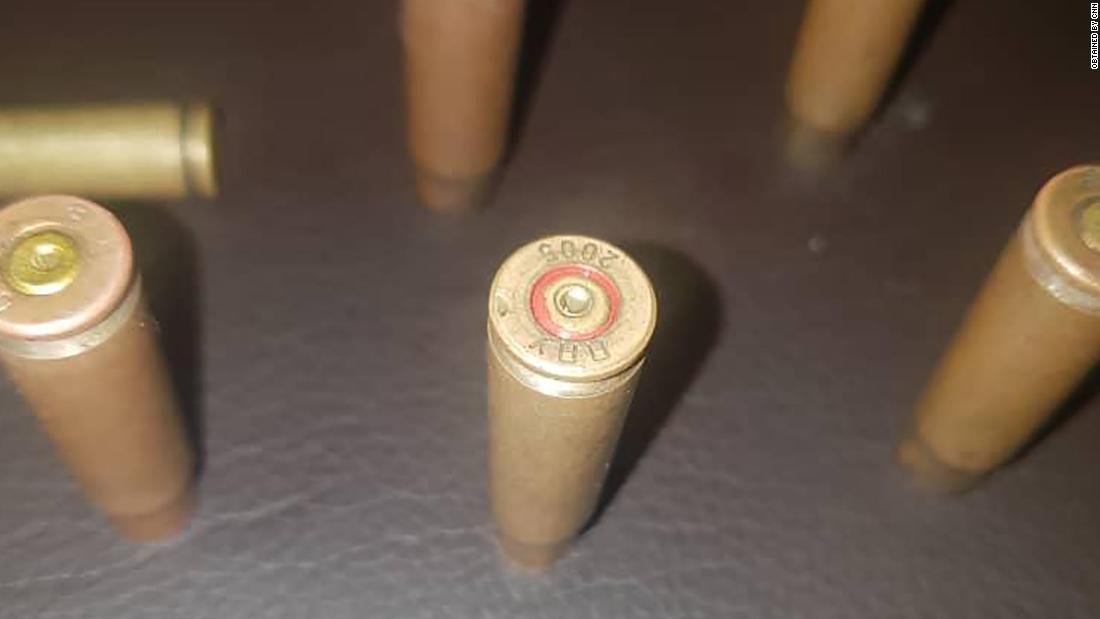
bullets fired at Lekki toll gate are from live ammunition. This one
was manufactured in Serbia in 2005, and is currently in use by the
Nigerian army.
Investigative Reporting Network, CNN has established that several
of the bullets from the Lekki toll gate originated from Serbia.
Export documents CNN has seen show that Nigeria purchased weaponry
from Serbia almost every year between 2005 and 2016.
scene, members of the police, including the SARS police unit —
disbanded by authorities on 11 October — moved in, according to
multiple eyewitnesses CNN spoke with.
geolocated to Lekki toll gate at 2:36 a.m., one eyewitness, Legend,
whose second name we’re not publishing for his safety, can be seen
with the Nigerian flag around his head saying, “…my hand is broken,
my leg is broken, and police are still shooting at us.”
"cnnix-golf__pullquote m-infographic-- js-whitelist">“I couldn’t count how many
dead because I was running for my life.”Legend
moves outside…Stay safe through the night. And if I don’t make it
through the night let it be known that I died fighting for our
freedom, for what we believe in.”
father was a police officer and that he recognized the SARS
uniform. About 200 protesters remained at the toll gate when
witnesses say police and SARS arrived, he added.
because I was running for my life,” Legend said. “If I stood my
ground five more seconds, I would be dead.”
independently verify that SARS members were present, multiple
eyewitnesses said they saw police officers, accompanied by officers
from the unit, at the scene after the army left.
declined to comment because of the ongoing panel investigation. But
police have denied any use of force against protesters on Twitter,
saying, “….our police officers never resorted to use of unlawful
force or shooting at the protesters.”
that occurred across Lagos in the aftermath of the Lekki toll gate
shooting has led to the authorities clamping down on people who
took part in the protests.
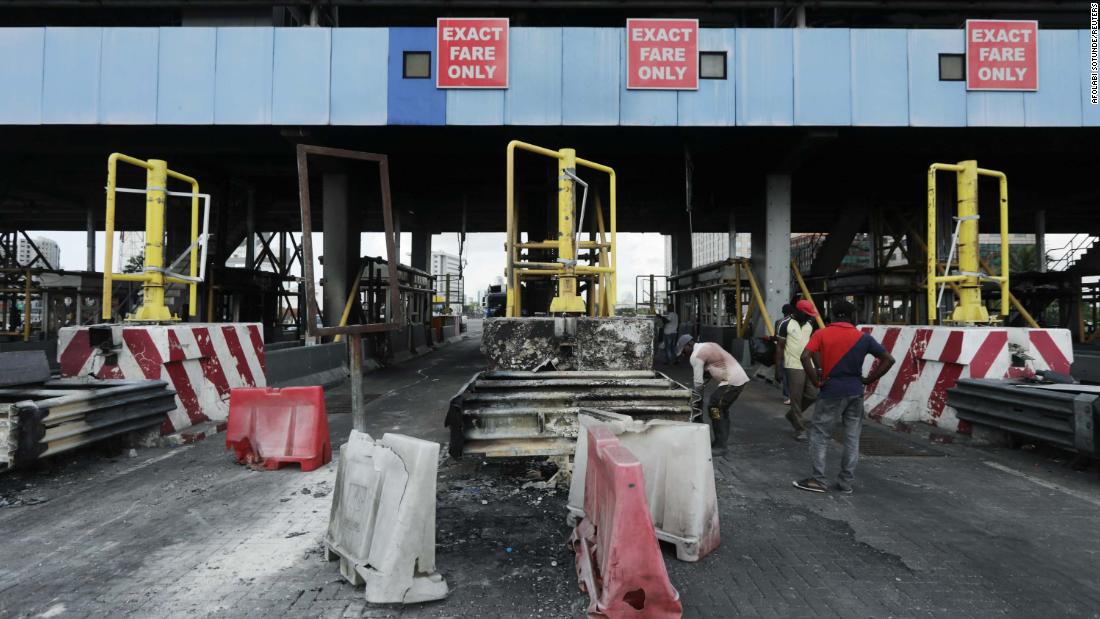
Lekki toll gate on October 24.
scapegoated for taking part in peaceful protests — wrongly blamed
for the looting — and fear has descended on the movement since the
shooting.
was giving legal advice to demonstrators arrested during the
protests, says she was recently prevented from leaving the country
after her passport was seized. Odele told CNN that her passport has
since been returned.
obtained a 90-day court order freezing the accounts of those who
took part in the demonstrations, according to media reports, while
a journalist who covered the protests was arrested and detained for
five days before being freed on bail.
country, while others are living in safe houses. Some told CNN they
were offered money to recant their initial testimonies.
received, though it is unclear who is sending them.
in danger,” an eyewitness named Sarah told CNN. “We can’t go out,
our jobs are on hold right now, and it’s really sad because we did
nothing wrong.”
change.”